Call the on-call midwife now
Someone from Wrenfield answers this line at any hour. You will not be waiting for a callback, and you do not need to be certain before you use it.
- Say your name and how many weeks you are.
- Say what changed, and when you first noticed it.
- Stay where you are until the midwife has told you what to do next.
If you are bleeding heavily, or the baby has not moved at all today, ring 999 first and Wrenfield afterwards.
Caseload midwifery · Leeds
Three midwives, and you will know all of them
One of them is yours, from the booking visit to the day you stop needing us.
Eighteen families a year, shared between three midwives. Home or hospital, and the decision stays yours until the week it happens.

-
Continuity, written into the rota
You meet all three midwives before 34 weeks.
-
Home or hospital, decided late
Nothing locks until the week it happens.
-
A line answered at any hour
By a midwife who has read your notes.
“I never once had to explain myself from the beginning.”
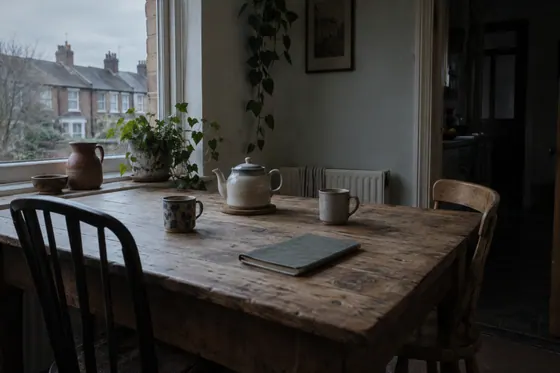
The booking visit
An hour and a half, at your kitchen table
The first visit happens where you live, not in a clinic. It takes about ninety minutes: your history, what is on your mind, and what you want the birth to look like if everything goes to plan.
We decide nothing that day. You get the notes by the evening and a second visit inside a fortnight.
Reasons people ring us
Any of these is worth a call
- The baby is moving less than usual, or the pattern has changed.
- Any bleeding at all, however little.
- A headache that paracetamol does not touch.
- Sudden swelling in your hands or face.
- Fluid, whether or not you are sure what it is.
- You feel that something has changed and cannot say what.
Your team
Meet the three of us
-

Rosalind Achterberg
Lead midwife, eleven years on caseload
NMC 71-04882
-
Ines Oyelaran-Fitzgibbon
Midwife, nights and water birth
NMC 69-51130
-
Marta Simonyté
Midwife, second at home births
NMC 74-20915
How it works
Three steps to booking us
-
A call, about twenty minutes
You tell us when you are due and what you want. We take no notes.
-
The booking visit at home
Ninety minutes, with whoever you want in the room.
-
You decide, and not that day
We send the notes and the fees in writing, and wait.
Fees
Three ways families book us
-
Full caseload care
Booking to six weeks after
Every visit, the birth, and postnatal care at home.
-
Birth care only
From 36 weeks
For families already under an NHS team who want continuity at the birth.
-
Postnatal only
The first six weeks
Feeding, recovery and the baby's checks, at your house.
Questions
What families ask first
What happens if I need to transfer to hospital?
Your midwife comes with you and stays. She cannot take clinical charge inside the hospital, but she knows your history and does the explaining, which is the part that otherwise falls to you at the worst possible moment.
Can I book you and still use NHS care?
Yes, and most families do. You keep your NHS scans and consultant appointments. We write to your community team when you book, so nobody is working from half a picture.
What if I change my mind about a home birth?
Change it whenever you like, including during labour. We go through the plan again at 36 weeks as a matter of course, and you never have to give a reason.
What if all three of you are at a birth?
We hold eighteen families a year precisely so this is rare, and we stop taking bookings for a month when it looks likely. If it happens, a midwife we work with regularly covers the line, and you will have met her.

Booking for next spring
Start with a call, not a commitment
Twenty minutes on the phone, no notes taken, and nothing asked of you afterwards.
Specimen 21
calm-practice
A design style taken from a counselling practice's website: its typefaces, its shapes, its spacing and the way it uses pictures, rebuilt around a different colour and a different business. This panel records each decision and how we reached it.
- Shape of the page
- One column of writing from top to bottom, with full-width bands to change the pace. No sidebar and no app frame; the opening is the only place the page splits in two.
- What it leads with
- Sentences rather than figures. Three kinds of number appear on the whole page: a phone number, each midwife's registration, and how many weeks along you are.
- Spacing
- Generous. Sections sit a long way apart and close up by one step on a narrow screen.
- The one bold decision
- Where a thing sits and how large it is carry the urgency; colour never does. Telling the practice something has changed opens an answer at the top of the page, and the rest steps back rather than vanishing.
- Typefaces
- Cormorant Garamond and Barlow, the two the original site uses. Every size grows smoothly between a phone and a desktop, using that site's own published sizes as the two ends.
- Corners
- Counted off the original rather than guessed: fully round buttons, gently rounded cards, pictures rounded only along the top, one large soft-cornered panel, and true circles for the stamp and the numbered steps.
- Pictures
- This page carries four pictures made for it, each one then facing the same checks a real photograph faces: how the highlights roll off, how much grain sits in the shadows, how the edges fall. The paper grain under the warm bands comes from a real sheet rather than a filter.
- Where the colours come from
- Nobody picked them. A small program works out the lightest version of each colour that is still comfortably readable on the darkest surface it can land on, and writes the result out.
| What sits on what | Light | Dark | Floor |
|---|---|---|---|
| Body text on the blue band | 7.88 | 7.47 | 4.5 |
| Button label on its own fill | 4.52 | 4.50 | 4.5 |
The same program re-checks sixty-seven of these pairs every time it rebuilds the colours, in both the light and the dark theme. None of them falls under its floor.
Where this one differs from the rest. Every other style in this portfolio borrows its colours from a design system somebody else publishes and maintains. This one has no such owner, so the portfolio works them out itself. Every colour on the page is the result of that calculation, and nobody typed in a single one by hand.
Why the midwives are initials. Photographs carry the original site and they carry this one. Inventing a person's face and printing a professional registration number under it would be inventing a credential, so the three appear as initials on paper instead. It is the one place on the page where a picture would mislead.