Elite downhill · World Cup 2026

NoaFerreday

Eight rounds, four minutes of racing, and a season that turns on the sections nobody watches.

Next round
Round 6
Venue
Val di Sole, Italy
Starts

What the season is for

Four minutes of racing a round, won in the sections nobody films and lost in the one everybody does.

The season so far

Five rounds raced

5th Best result · Leogang
8.0 Average place, four finishes
+2.104 Closest to the winner, seconds
4 / 5 Rounds finished
Every round of the 2026 elite women's downhill season. The bar is the gap to the winner in seconds, drawn against the largest gap of the year, so a shorter bar is a better run.
Rd Venue Place Gap to the winner
1 Lourdes, France 11th
+6.412
2 Fort William, Scotland 7th
+3.980
3 Leogang, Austria 5th
+2.104
4 Bielsko-Biała, Poland Did not finish
No time
5 Loudenvielle, France 9th
+5.230
6 Val di Sole, Italy 12 July
Not raced
7 Mont-Sainte-Anne, Canada 2 August
Not raced
8 Lenzerheide, Switzerland 30 August
Not raced

Three rows carry no bar, and they are three different things. She started Round 4 and did not finish it, so there is no time to draw. She has not raced Rounds 6 to 8 yet, so there is nothing to draw. The average place counts her four finishes and leaves Round 4 out, which is why that figure reads 8.0 rather than something lower.

Round 3 · Leogang

Where the 2.104 went

The best run of the year, taken apart. Four of the five sections were within a second of the winner. One was not.

  • Top woods −0.104
  • Motorway +0.612
  • Rock garden +1.330
  • Road gap +0.088
  • Finish straight +0.178

Every mark starts at the line. Time she gained carries a minus sign and time she lost carries a plus. The five add up to the 2.104 in the results table, which is the only way to check that a chart of sections is a chart of the same run.

Five rounds

Raced so far

The season read across instead of down. Two of these are the runs the table is about; the rest is the year around them.

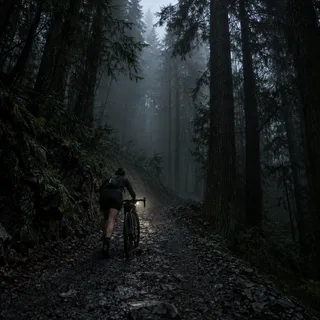
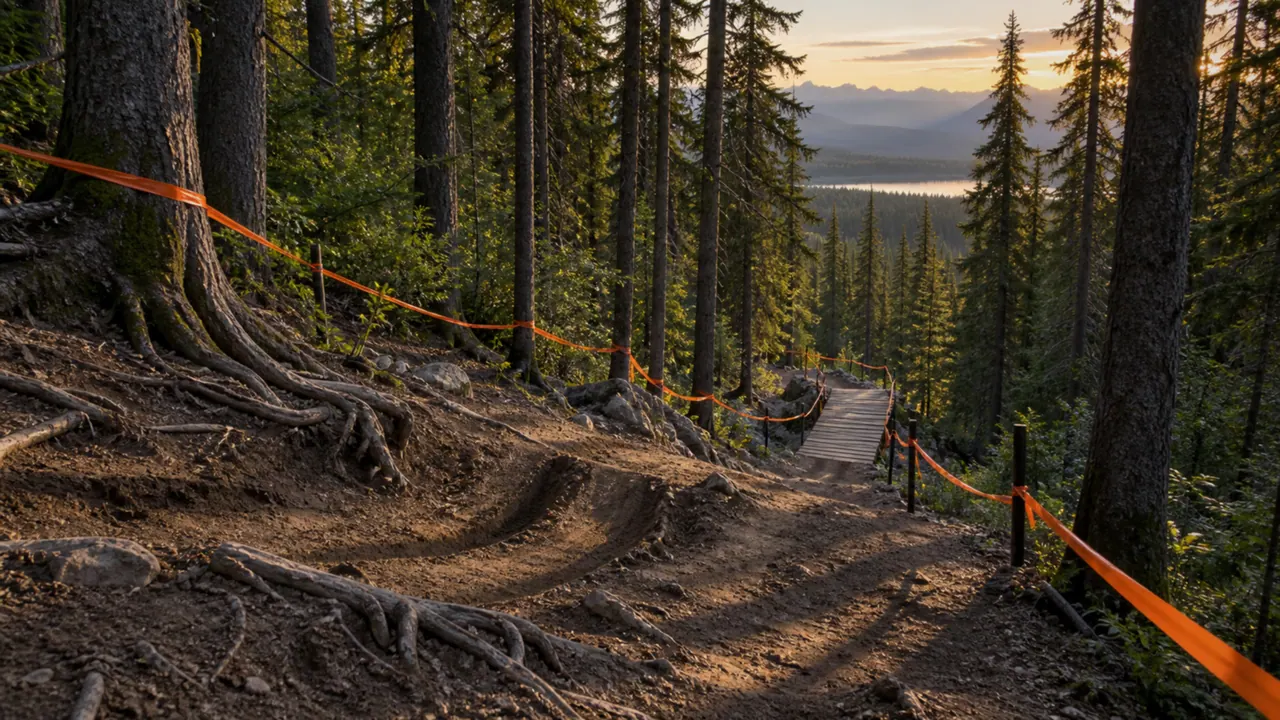
Pine forest at dusk beside a race course, in the last of the light.
Rd 1Lourdes · 11th

Eleventh at the first round, and the gap was six and a half seconds.

A rider on a downhill bike in loose dust, front wheel turned into the corner.
Rd 3Leogang · 5th

+2.104

Closest to the winner

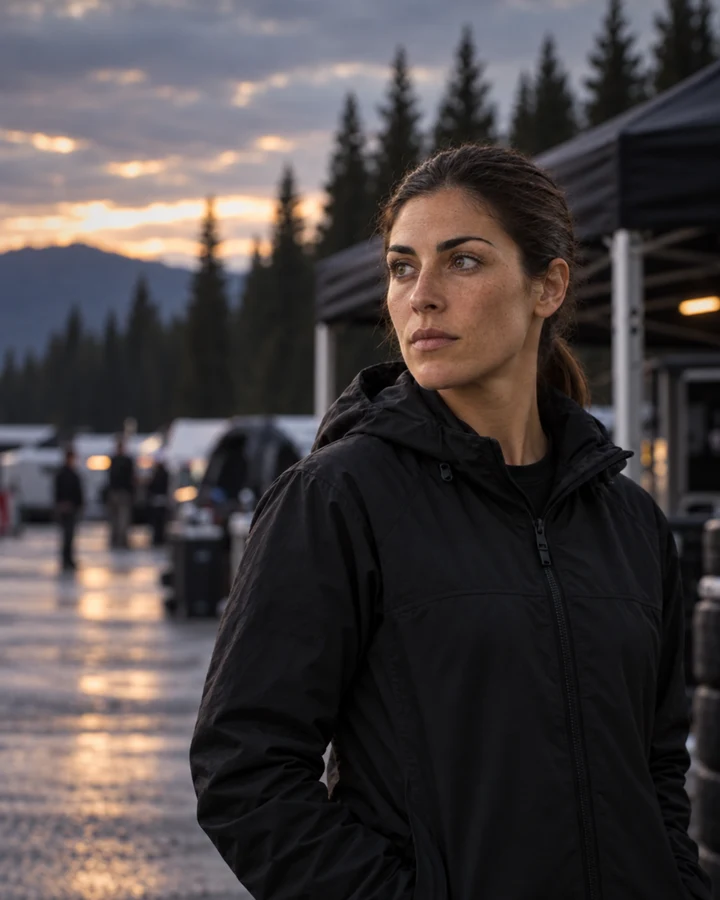
Noa Ferreday in a paddock at the end of the day, jacket zipped.
Rd 4Bielsko-Biała · no time

She has finished four of five and led the second split at three of them. The rock garden is where all of it goes.

4 / 5

Rounds finished

Where to go next

On track

Five results, the gap to the winner at each of them, and the run taken apart section by section.

Off track

Twelve years on one hill outside Machynlleth, and the Saturday group she coaches there between rounds.

Under her

The same bike all season

One frame and one fork, unchanged since Lourdes. The only thing that moves between rounds is the rubber.

Frame
200 mm rear travel, 63.5° head angle
Fork
203 mm, 38 mm stanchions
Sag
28 per cent, unchanged since round 1
Bar
780 mm, 20 mm rise
Tyres
2.5 front, 2.4 rear — compound by round
Gearing
34 tooth, seven speed

See every round

Noa Ferreday standing in a race paddock at the end of the day, jacket zipped, looking away from the camera.

Off track

Twelve years on the same hill

She learned to ride on a fire road outside Machynlleth, on a bike two sizes too big, and she has never raced a season without going back to it. The hill is 340 metres of descent and she can ride it in the dark.

Between rounds she coaches a Saturday morning group there, eleven riders, most of them under fourteen. Six of them race now.

You cannot win a race in the rock garden. You can lose one there in a second and a third.
Noa Ferreday, after Round 3

What remains

Three rounds to go

  • Round 6 Val di Sole 12 July · Italy
  • Round 7 Mont-Sainte-Anne 2 August · Canada
  • Round 8 Lenzerheide 30 August · Switzerland

Read the season back

Support

Four names on the bike

  • Coldridge
  • Meridian Tyres
  • Stavely
  • Harlow Forks

Between rounds

Follow the season

Runs, splits and the weekend after every round.

Design notes

Nine decisions

Shape of the page
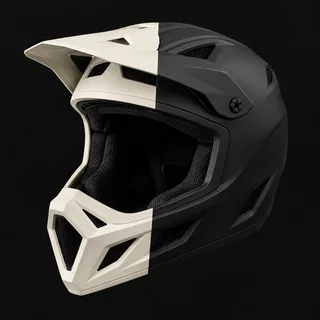
An editorial spread. Full-width bands down a single 80rem hold, with one band inverted to cream so the page has a middle rather than a length. Two of them break the column: a strip of the season read across instead of down, and a screen holding two ways on and nothing else.
What a lid does when you point at it
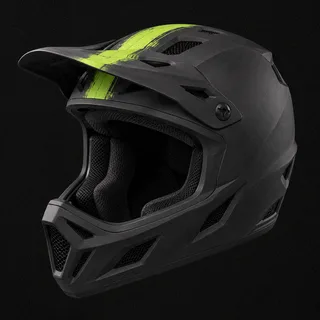
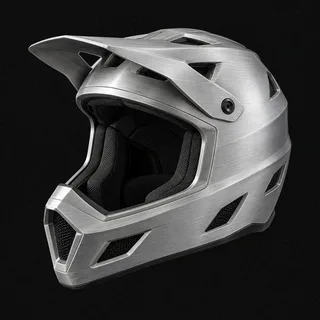
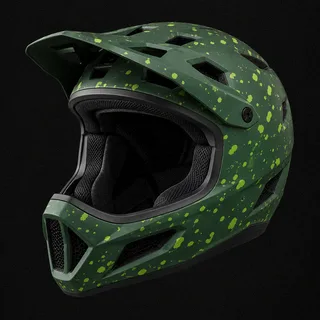
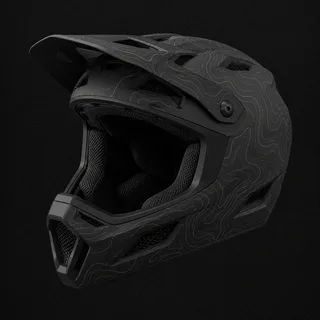
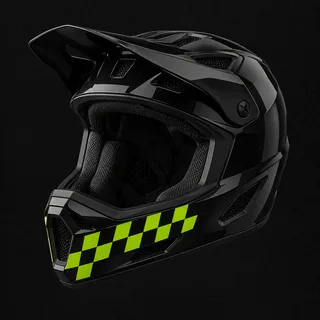
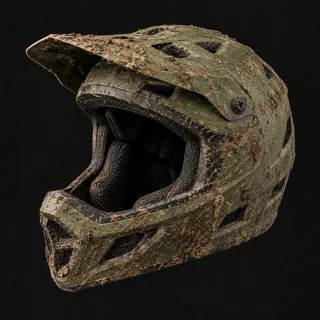
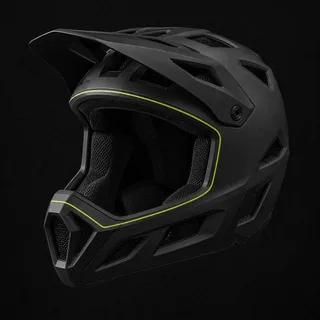
The wall of eight opens rather than swaps. A cell lights its four corners, lifts the helmet a little, and a spray of dirt opens down over it from the top edge on a curve, so the lid is still underneath at the end of it. Every cell answers a keyboard the same way it answers a pointer, and each one goes to the round it was painted for.
What it leads with
Numbers. A season is a set of measurements, so the measurements are the spine and the photographs sit behind them.
Spacing
Generous, on a ladder that starts at 1rem. Bands sit 5rem apart and the results table sits close, so the rows read as one block.
The head
The portrait is a cutout on a relief that turns towards the pointer. A trail follows the pointer and changes what it crosses: the face drains to two tones, a full-face lid appears on the head, and the contour ground fills in between its lines. The lid row puts the lid on without the pointer, and on scroll the head recedes, loses its colour and settles into a frame beside the statement.
The one bold decision
Size and length carry every magnitude on the page. The one bright colour appears once per section and never twice, so it always means the same thing: this is the one to look at.
Where the colour comes from
The near-black and the acid green are the same colour at two strengths, so the page is one decision rather than a colour dropped onto a grey. Every other value clears the readability it owes against the worst surface it can land on. The ground is not flat: it carries contour lines, drawn from the same two colours as the page under them, so the field can never be harder to read than the plain ground it replaced. An inverting band turns the ground over with it.
Type
Two families that do different jobs. The workhorse has a width axis the page spends (the name runs as wide as the face goes, the small capitals as narrow), so width carries rank as well as size. The second family is a high-contrast serif and it appears on about one word in twenty: the given name, the quantity in each section title, and the two verbs the quotation turns on.
Motion
One gesture, used everywhere. A line arrives masked under a solid bar of the accent, unmasks left to right, and the bar wipes off after it, so the bright colour touches every heading for a third of a second and is gone. Two things move on their own: the name strip along the bottom, and the trail in the masthead, which drifts on a slow figure after the pointer has rested for a while. Neither carries a control to stop it. A hairline across the top reads the position on the page, the contour ground drifts under it, and the head turns only as far as the pointer asks. With motion turned off in the system settings, the trail becomes a still disc under the pointer, the ground holds, and everything else is already in place.
Readability, measured. Higher is easier to read, and 4.5 is the floor for ordinary text.
What sits on what Carries Ratio
Chalk on near-blackthe name, every heading15.09:1
Near-black on creamthe inverted band15.09:1
Acid green on near-blacklinks, the eyebrow, every wipe14.69:1
Near-black on acid greenthe button, selected text14.69:1
Chalk on the raised cardheadings over a card12.43:1
Grey on the raised cardevery muted line4.50:1
Grey on near-blackthe bars in the table3.67:1

The first two rows are the same pair read in both directions, because the ink of one theme is the ground of the other. Two greys, not one: the hairline between rows is far too faint to read text against, so it separates rows and does nothing else, and anything drawing the edge of a control is a step darker. The trough a bar sits in is fainter again, so a full trough is never mistaken for a full bar. The label on the acid green is the page’s own near-black, which is the darkest thing this palette has rather than the first shade that cleared the floor. On a colour this bright the two are a long way apart, and stopping at the first one gives a smudge that passes.